


News Navigation
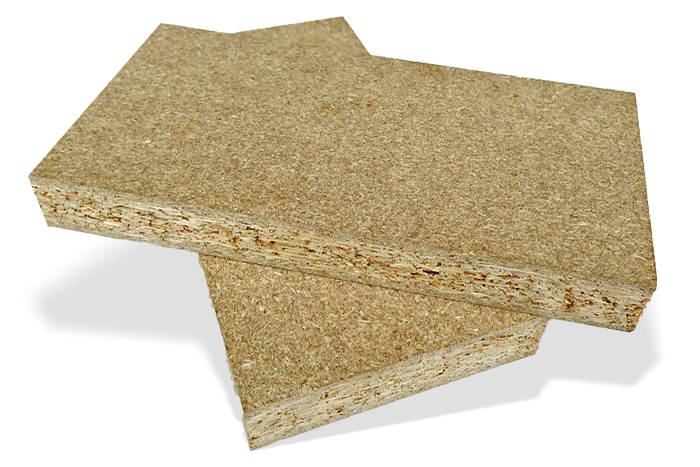
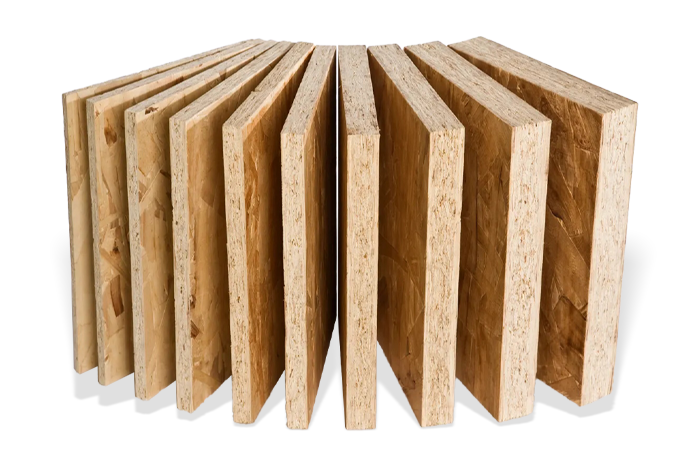
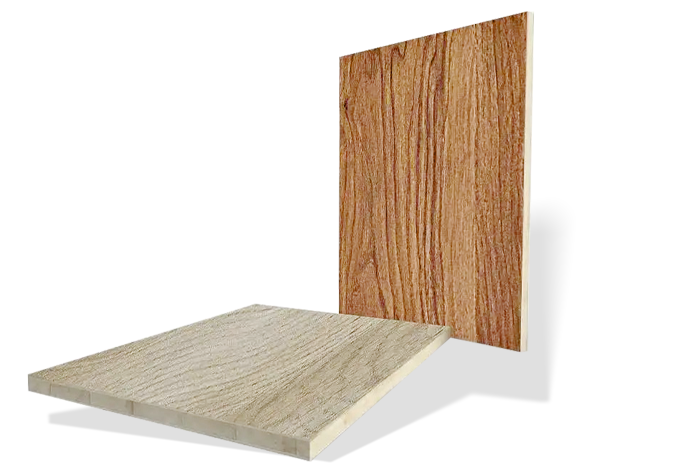
The whole?house custom furniture industry mainly adopts large?scale mass?production modes. Products such as wardrobes, cabinets, wall panels and storage cabinets are mostly manufactured through mechanical processes including board cutting, drilling and edge banding. The compactness and structural stability of board substrates directly affect the production performance and material consumption of the entire production line. Conventional particle boards feature loose substrate structures with uneven wood?fiber distribution and numerous internal voids. During mechanical cutting, the board edges are prone to chipping, dusting and delamination. Poor?quality cut surfaces require secondary manual trimming and sanding, increasing workload. Boards with severe cutting defects have to be scrapped instead of being put into use, which causes material waste and raises material costs for furniture manufacturers.
Moisture?resistant eco?friendly particle boards are optimized in internal substrate structure with uniform and compact overall texture, well suited for mechanized assembly?line processing conditions.
In mass furniture production, edge banding serves as a critical procedure that determines the appearance and structural performance of finished furniture. Boards with unstable substrates suffer from insufficient surface flatness and irregular internal void distribution. Uneven bonding gaps will form when edge?banding materials are applied, which may lead to edge lifting, debonding and exposed gaps. Under mass?production conditions, processing defects of individual boards keep accumulating and increase rework workload in later stages. Frequent board waste and rework adjustments disrupt production?line flow, extend order lead?time and hinder regular mass?production operations of furniture factories.
Manufactured with improved hot?pressing technology, moisture?resistant eco?friendly particle boards adopt well?proportioned wood fibers compacted under high pressure. The substrates deliver consistent dense structure, uniform hardness and smooth solid surfaces without partial looseness or voids. Thanks to stable substrate performance, boards produce smooth cut surfaces in CNC cutting equipment, and edge fibers are less likely to fall off, greatly reducing processing defects such as chipping, delamination and dusting. Neat cut surfaces require little manual trimming. Cut boards can directly proceed to drilling and edge?banding procedures, simplifying workflows and cutting labor?hour consumption caused by manual finishing.
During automatic edge?banding operations, flat and uniform board end faces enable tight bonding with edge bands and uniform glue penetration for consistent adhesion performance. Stable board structures avoid partial hollow and poor bonding, lowering the occurrence rate of edge debonding and lifting and reducing rework volume for finished furniture. Meanwhile, the moisture?resistant property prevents substrate softening induced by humid workshop environments. It maintains structural stability throughout processing and avoids deformation or loosening triggered by ambient humidity.
Made of eco?friendly raw?material formulas without excessive harmful additives, this particle board meets indoor furniture standards and fits various whole?house customization scenarios for residential and commercial projects. Boards feature consistent specifications. Uniform thickness and flatness are guaranteed within each batch, adapting to standardized automatic assembly?line processing. There is no need to adjust equipment parameters for individual boards, matching continuous mass?production rhythms of factories. Reliable substrate performance effectively cuts scrap rates and raw?material waste, maximizing the utilization rate of raw materials for finished?goods manufacturing.
Production costs and capacity efficiency of whole?house custom furniture are closely related to substrate stability. Inconsistent substrate structures constitute the major cause of processing loss and rework, which exert long?term impacts on factory production benefits. Optimized for processing compatibility at the substrate?structure level, moisture?resistant eco?friendly particle boards combine structural stability and environmental adaptability. They are compatible with cutting, edge?banding and drilling processes for various panel?type furniture. Suitable for multiple production scenarios including commercial real?estate customization, residential whole?house customization and commercial furniture fabrication, they support daily mechanized mass?production of furniture factories and provide reliable board supplies for panel?furniture manufacturing.

 Mobile Number:Zhang Zong 13812811801 Xie Zong 15618328869
 Marketing Call:0512-52672388
 Fax Number:0512-52671910
Company Address:Xushi Nandu Qiaotu, DONGBANG Town, Changshu City, Jiangsu Province

Enterprise wechat

 Home
Home
 Wechat
 Tell
Tell